
Technical guide
How to Choose Scaffold Platform Length
Measure the work face, access route, usable floor area, and required platform positions before comparing published platform records.
Read the guide →Technical resource pillar
Compare scaffold formats, working dimensions, project conditions, and quote inputs before requesting a configuration.
Start with verified context
Scaffold selection begins with the work area rather than a single catalog dimension. The intended task, platform position, floor space, access route, indoor or outdoor environment, mobility, obstructions, and complete configuration all affect which product pathway deserves review.
These guides help commercial buyers organize measurements and questions. They connect directly to published Upright Scaffold product families and quote workflows without selecting equipment remotely or turning general guidance into an unsupported technical approval.
Featured technical guides
Technical guide
Measure the work face, access route, usable floor area, and required platform positions before comparing published platform records.
Read the guide →Technical guide
Compare transport, setup area, mobility, component relationships, and documented product families before selecting a base format.
Read the guide →Technical guide
A complete inquiry identifies the task, dimensions, environment, product family, quantity, timing, and delivery destination.
Read the guide →Technical guide
Single-width systems prioritize a narrower footprint; double-width systems provide a broader platform format. Verify dimensions, task space, access, and configuration.
Read the guide →Technical guide
Choose a mobile tower from the task, platform position, floor, movement route, access, complete configuration, and verified component relationships.
Read the guide →Technical guide
Separate platform height, working height, and overall height, then verify stability, access, environment, configuration, and manufacturer limits.
Read the guide →Technical guide
Platform width affects working space and footprint but does not independently determine capacity, suitability, access, or stability.
Read the guide →Technical guide
Select casters by exact part identity, scaffold family, attachment, verified dimensions, floor and movement conditions, and complete-system compatibility.
Read the guide →Technical guide
An outrigger is a configuration component, not a universal height remedy. Verify the exact system, part, orientation, instructions, floor, and stability plan.
Read the guide →Technical guide
Use exact brace identity, length, connection, orientation, system context, and current instructions; appearance does not establish interchangeability.
Read the guide →Technical guide
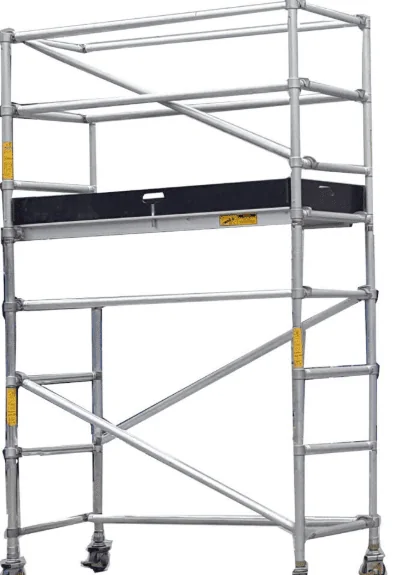
Frames, braces, platforms, bases, casters, access, guarding, and stabilization work as a complete system.
Read the guide →Technical guide
Identify a part using exact markings, dimensions, connection geometry, orientation, source system, photographs, and documentation.
Read the guide →Technical guide
Material alone does not select a scaffold. Compare verified system data, task, environment, handling, configuration, maintenance, and project requirements.
Read the guide →Technical guide
Indoor and outdoor work introduce different floor, weather, wind, electrical, traffic, access, contamination, and movement conditions.
Read the guide →Technical guide
Tight-space access requires verified clearances, entry dimensions, platform position, access, egress, obstructions, movement, and surrounding hazards.
Read the guide →Technical guide
Facility maintenance selection should account for repeated tasks, production interfaces, floor protection, doors, utilities, storage, and movement routes.
Read the guide →Technical guide
Warehouse planning includes aisles, racks, doors, docks, forklifts, pedestrians, floor condition, overhead systems, inventory, and work-zone control.
Read the guide →Technical guide
Aircraft access begins with task positions, no-contact areas, hangar conditions, tools, mobility, aircraft protection, and project-specific review.
Read the guide →Technical guide
Use a verified standard system when it fits; use a controlled custom-access process when geometry, clearances, interfaces, or operations require it.
Read the guide →Next step
Share exact product or part numbers, project conditions, measurements, quantities, timing, and destination for review.