
Nationwide Scaffold Systems, Platforms and Replacement PartsCall (877) 697-2233sales@uprightscaffold.comDownloads
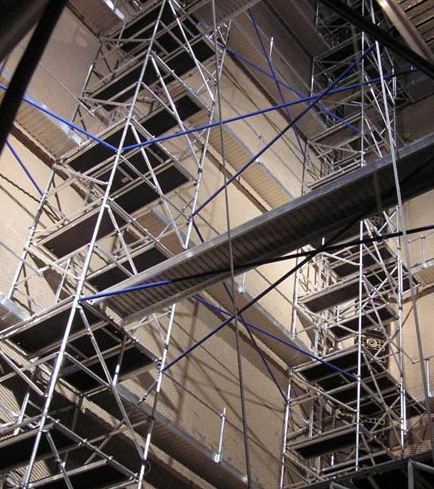
Instant Snap-Out modular boiler scaffold assembled for elevated access inside an industrial structure

Restricted-Access Scaffold System

Instant Snap-Out Boiler Scaffold

A lightweight folding scaffold system designed for access through small openings and assembly within boilers, tanks, shafts and other enclosed industrial work areas.

Call (877) 697-2233 · sales@uprightscaffold.com

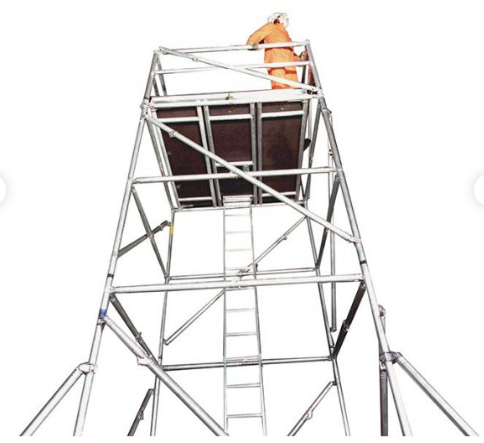
Assembled Instant Snap-Out boiler scaffold with ladder, platforms, guardrails and stabilizers
Assembled Instant Snap-Out system. Final geometry, stabilization, access and platform configuration require project review.

Source-supported overview

Portable modules for a difficult physical access problem

Industrial maintenance teams can encounter a basic obstacle before elevated work even begins: conventional scaffold sections may be too bulky to move through the available hatch, passage or enclosed route. The supplied Instant Snap-Out material describes a scaffold system developed for limited entry into tanks, aggregates, shafts and enclosed rooms, with applications in chemical, power and shipbuilding environments. The product’s defining idea is portability through restricted openings followed by assembly within the work area.

Snap-Out uses articulated horizontal and diagonal braces that allow a section to fold into a compact bundle. The source also identifies automatically locking braces, Instant Rib-Grip joints and a strong safety strap that keeps a folded bundle together. These characteristics help explain how a larger working structure can begin as transportable modules. They do not eliminate the need to identify each component, inspect connections, follow the complete instructions or confirm that the selected modules can be handled through the actual route.

The listed minimum opening is 0.36 m × 0.36 m, approximately 360 mm × 360 mm. That value is a product reference. Actual access feasibility must account for hatch shape, protrusions, insulation, bends, entry angle, handling clearance, the selected section, platform pieces, ladders, guardrails, accessories and the route between the staging point and work zone. A square nominal dimension cannot describe every real opening.
Product characteristics

How the Snap-Out concept supports restricted-entry work

Lightweight and compact

The source describes Snap-Out folding into a light, compact and manageable bundle for storage and transport. This can help when equipment must move between facility areas, stage near hatches, pass through limited openings or be carried along a constrained route. No exact folded weight or bundle diameter is documented here.

Limited-access entry

Boiler hatches, tank hatches and other limited-access points are named applications. Measure the entire route and record clear width, height, shape, angle, obstructions and handling room. Confirm the selected configuration rather than relying on the minimum opening alone.

Folding module function

The source says a folded section unfolds into a tower module. Additional folded modules may be lifted into position, locked to the module below and extended toward the required platform height. It does not state maximum height, module count, assembly time or crew size.

Tool-free primary assembly

The source documentation describes the primary Snap-Out module assembly and disassembly process as tool-free. Site procedures, accessories, tie-ins, lifting arrangements or project-specific components may still require additional equipment or tools.

Articulated braces and locking

Horizontal and diagonal articulated braces enable folding, while the source references automatic locking and Instant Rib-Grip joints. Automatic operation is not fail-safe and never replaces inspection, connection verification or compliance with current instructions.

Quality reference awaiting detail

The source documentation references international design, production and quality standards. Specific standards, certifications and project requirements should be confirmed in writing before purchase or use. Identifying the exact referenced standards remains an internal verification task.

Verified supplied values

Instant Snap-Out product specifications

SpecificationAvailable value
Standard section1.29 m × 1.29 m or 1.83 m × 1.83 m
Listed minimum access opening0.36 m × 0.36 m
Standard platform width0.56 m
Standard platform length1.29 m or 1.83 m
Special platform width0.28 m, connected as two pieces
Special platform length1.29 m or 1.83 m

Platform configurations

Standard and twin special platform options

Standard platform

The standard platform is listed at 0.56 m wide and in 1.29 m or 1.83 m lengths. These values support preliminary comparison with the work zone and entry route, but they do not establish platform loading, deck construction, support spacing or the complete scaffold arrangement.

Twin special platform

The source says Snap-Out can be delivered with a special “twin set” platform. The supplied table describes two connected pieces, each 0.28 m wide, with listed lengths of 1.29 m or 1.83 m. A divided platform may be relevant where transport or entry is constrained, but the connection hardware, assembled loading and permitted configuration are not supplied.

No exact part numbers accompany either platform option. They remain configuration choices within the Instant Snap-Out family rather than separate invented products or SKUs.

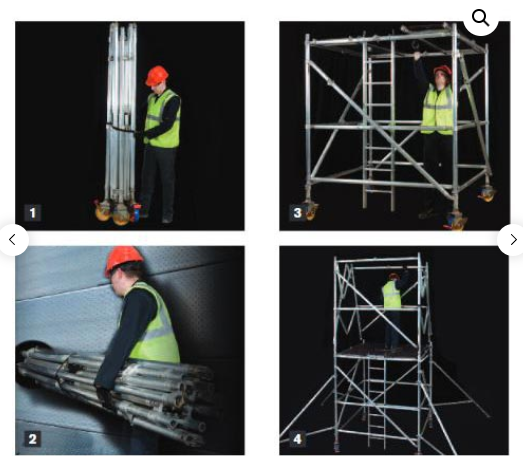
Worker handling folded Instant Snap-Out scaffold modules and standing within assembled configurations
Folded transport form and assembled examples. The person is shown only as application context; this image is not an assembly instruction.

Optional equipment

Optional Section-Hoisting Arrangement

The source states that a special davit arrangement may be available for hoisting sections during assembly and disassembly. For a boiler, tank or vessel project, controlled component movement can be part of planning when sections must travel vertically from a restricted staging area. Availability and compatibility must be confirmed for the exact Snap-Out configuration.

The supplied information does not state davit capacity, hoisting height, anchorage, rigging method, certification or compatibility with every system. A project request should distinguish the section movement path from worker access and identify who controls the lifting plan, rigging, inspection and communication.

Industries and applications

Where restricted-entry scaffold planning begins

Boiler maintenance and outage work

Inspection, cleaning, repair, tube work, refractory work and internal maintenance can create access needs at different elevations within a boiler. During shutdowns and outages, planners should record hatch dimensions, internal geometry, residue, temperature, isolation status, working zones, simultaneous operations and removal routes. Snap-Out may provide a product pathway when modular sections must pass through limited openings, but no page can confirm suitability for every boiler design.

Tanks and industrial vessels

Storage tanks, process tanks and large vessels can contain curved walls, internal structures, uneven surfaces and elevated inspection areas. Entry dimensions are only one part of the problem. Teams should document internal floor or vessel-surface conditions, clear staging space, obstructions, access to each work elevation and how components leave the area at the end of the task.

Power generation

Power plants, utility facilities and industrial energy systems often plan maintenance around controlled outages and fixed equipment. The compact module concept may help address boiler-related geometry and restricted movement paths. It does not establish approval under a utility standard or authorize use near energized, hot or otherwise hazardous equipment. Connect planning with the power-generation access pathway.

Chemical and process facilities

Restricted equipment and vessel access in a chemical or process facility requires review of chemical exposure, decontamination, isolation, atmosphere, residue and material compatibility. Product portability cannot resolve those hazards. Facility procedures and authorized safety personnel govern whether entry and work may proceed.

Shipbuilding and marine facilities

Ship compartments and internal vessel areas may involve limited routes, corrosion, movement, changing surfaces and marine-specific procedures. Record every hatch and turn, the staging point, the intended work zone and environmental conditions. The source identifies shipbuilding as an application context without claiming universal marine approval.

Shafts, enclosed structures and turnarounds

Vertical shafts and enclosed structures can reward compact transport, but they also concentrate concerns around falling objects, component control, communication, emergency access and section movement. During industrial shutdowns and turnarounds, modular equipment can be staged for difficult-to-reach zones only after the complete sequence and responsibilities are understood.

Safety planning

Fitting through the opening is only the first review

A compact scaffold that fits through an opening does not by itself make the work area safe for entry or use. Product selection and planning may require review of access-opening dimensions, the complete entry route, atmospheric conditions, ventilation, isolation and lockout, temperature, chemical residue, lighting, communication, fall hazards, dropped-object hazards, rescue planning, emergency access, material compatibility, floor or vessel-surface condition, assembly sequence, section-hoisting method, platform loading and qualified inspection.

The Instant Snap-Out system is designed to address the physical access challenge of moving scaffold components through restricted openings. Entry procedures, atmospheric testing, ventilation, rescue planning, permits, worker training and other confined-space requirements remain separate responsibilities governed by the worksite and applicable safety requirements.

This page does not replace manufacturer instructions, site safety procedures, engineering review, a confined-space entry program, permit-required confined-space requirements, rescue planning, employer training or competent and qualified review. Stop when documentation is incomplete, components cannot be identified, connections differ from the current instructions or site conditions change.

Preliminary access review

Request an Instant Snap-Out project review

Provide non-sensitive access and project information. Product configuration, opening clearance, assembly method, platform requirements, availability, pricing and site suitability must be confirmed in writing.

Secure file storage is not configured. Sales can provide an approved file-transfer method.
Do not submit proprietary or hazardous-process files through this form.

Frequently asked questions

What is Instant Snap-Out boiler scaffolding?

Instant Snap-Out is a folding scaffold system intended to address the physical challenge of moving scaffold sections through restricted openings and assembling them within boilers, tanks, shafts, vessels and other enclosed industrial work areas.

What types of facilities use Snap-Out scaffolding?

The supplied source identifies tanks, aggregates, shafts, chemical-industry applications, power-industry applications, shipbuilding applications, enclosed rooms and other limited-access locations. Suitability for a particular facility or task requires project review.

How small of an opening can the system pass through?

The source lists a minimum access opening of 0.36 m × 0.36 m. This is a product reference, not a promise that every selected module will pass through every opening of that nominal size. Hatch shape, obstructions, angle and handling clearance must be checked.

What standard section sizes are listed?

The supplied specification lists standard-section configurations of 1.29 m × 1.29 m and 1.83 m × 1.83 m. The source does not further define those measurements as external frame, base or platform dimensions.

What platform sizes are available?

The source lists a standard platform width of 0.56 m with lengths of 1.29 m or 1.83 m. It also lists a two-piece special platform using 0.28 m-wide pieces in the same listed lengths.

What is the twin special platform?

The source describes a special platform as a twin set. The listed configuration uses two connected pieces, each 0.28 m wide, with listed lengths of 1.29 m or 1.83 m. Connection hardware, loading and deck material are not specified in the supplied material.

Does the system require tools for assembly?

The source describes primary Snap-Out assembly and disassembly as tool-free. Site procedures, accessories, tie-ins, lifting arrangements or project-specific components may still require equipment or tools.

How do the folding modules work?

Articulated diagonal and horizontal braces allow sections to fold into a compact bundle. The source describes modules unfolding into tower form, locking to the module below and extending to the required platform position. Complete current instructions govern the actual procedure.

Is a davit arrangement available?

The source says a special davit arrangement may be available for hoisting sections during assembly and disassembly. Capacity, rigging, anchorage, compatibility and the permitted procedure require written confirmation. It must not be represented as personnel-lifting equipment.

Can Snap-Out scaffold be used inside tanks?

Tank hatches and limited-access tank work are identified applications, but the system is not automatically suitable for every tank. Geometry, atmosphere, residue, isolation, surfaces, access and the complete site program require review.

Is the system automatically approved for confined-space work?

No. A compact scaffold that fits through an opening does not establish that a space is safe to enter. Classification, permits, atmospheric testing, ventilation, communication, rescue, training and employer procedures remain separate.

What information is needed for a quote?

Provide the complete entry route, hatch width and height, structure type, required working and platform heights, preferred section and platform sizes, number of access locations, location, schedule, shipping ZIP code and non-sensitive photographs or drawings through an approved channel.

Can the system be configured to different platform heights?

The source describes modules being extended to the required platform height, but it does not provide a maximum height, module count or universal configuration. The required arrangement must be confirmed in writing.

Are individual replacement components available?

No verified part numbers were supplied for individual Snap-Out components. Replacement items should remain configuration options within the family until exact codes and compatibility are documented.

Does the website provide assembly instructions?

No. This page provides product identification and quote-planning context. It does not replace the complete current manufacturer instructions, site procedures, engineering review or qualified inspection.