
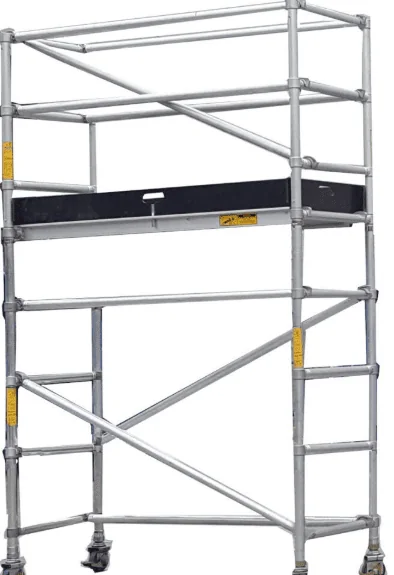
Short answer
For construction scaffolds subject to 29 CFR 1926.451(f)(3), inspection for visible defects by a competent person is required before each work shift and after an occurrence that could affect structural integrity.
Open and print the scaffold inspection record checklist
Scope and source boundary
This guide uses the supplied 59-page OSHA scaffold publication as its primary source document and checks regulatory statements against current official OSHA pages. The uploaded publication is a historical educational reference; OSHA controls its standards, interpretations, enforcement materials, and updates.
Source-derived requirements, general planning guidance, Upright product pathways, and site decisions are not interchangeable. Exact equipment instructions govern product configuration. The employer and the required competent person, qualified person, trainer, engineer, or other responsible party must apply current requirements to the actual scaffold, activity, jurisdiction, and worksite.
- 29 CFR 1926.450 definitions
- 29 CFR 1926.451 general requirements
- Employer and site-specific written procedures
Before each work shift
For construction scaffolds covered by 29 CFR 1926.451(f)(3), a competent person must inspect scaffolds and components for visible defects before every work shift. An inspection at initial erection or on a previous shift does not replace this requirement.
The competent-person role includes the ability to recognize hazards and authority to take corrective action. A completed form or green tag does not establish that role.
After an occurrence that could affect structural integrity
The same provision requires inspection after an occurrence that could affect structural integrity. Impact, damage, alteration, movement, severe weather or settlement should be evaluated in context under the applicable rule, current instructions and employer procedure.
Do not treat a fixed weekly schedule as a substitute for the pre-shift and occurrence-based construction requirements. Other jurisdictions, activities or manufacturer instructions may add different obligations.
Use a checklist to support the inspection record
The printable checklist is a record aid for the responsible site personnel. It does not replace the full regulation, manufacturer instructions or the competent person’s judgment.
Keep component identity, findings, required corrective action and release authority clear. If replacement parts are needed, request compatibility confirmation separately from the site’s decision about safe use.
Apply this topic through a controlled project record
Begin the how often inspect scaffolding review with evidence rather than assumptions. Record the exact scaffold family, model and component markings; retain the current manufacturer instructions; identify the applicable sections of the current OSHA standard; and document the work activity, environment, dimensions, loading inputs, access route, surrounding operations, and responsible personnel. If the supplied PDF, an older manual, a current product document, and the present worksite appear to point in different directions, preserve the conflict and obtain clarification instead of selecting the most convenient statement.
Separate product facts from project decisions. A verified part number, platform dimension, or manual relationship can support identification, but it does not decide the foundation, assembly, permitted loading, fall-protection method, inspection outcome, training adequacy, or site authorization. Those decisions depend on the complete configuration and the people assigned responsibility by the rule, employer program, design documents, and manufacturer instructions. A change to one component or work condition may require the review to be reopened.
Use photographs and drawings carefully. Capture labels, connections, damage, clearances, openings, floor or ground conditions, and the relationship to the work face without treating a photograph as proof of structural capacity. Do not send classified, export-controlled, proprietary, or sensitive facility information through a general website form. Upright Scaffold can arrange an approved transfer process for authorized files when a product or custom-platform inquiry requires them.
A commercial request should identify what needs to be quoted and what remains unresolved. Include quantities, destination, requested timing, known product codes, and whether purchase or rental is being considered, while listing technical questions separately. Written pricing, availability, shipping, and compatibility confirmation do not replace the current safety requirements or authorize use. If critical specifications, instructions, compatibility, or responsible-person decisions are missing, stop the selection process and request the necessary documentation.
Official OSHA sources
Use these descriptive links to verify current wording and navigate to the complete official context. External OSHA pages open in a new tab.
OSHA 1926.450 Subpart L scaffold publication, 59 pages, PDF. Preserved without modification.